
Solder and Crimp Signal Connectors for Custom Looms
Custom looms sit or fall on how well each termination has been made. AP Technology supplies signal connectors with crimp or solder contacts, allowing loom builders to use the termination method that suits their tooling, batch size and quality requirements. Crimp usually suits repeat production, while solder can be useful for short runs and repairs. If you would rather not make up the loom yourself, AP Technology can build it in house, test it and supply it ready to fit to your machine. Harsh or aggressive conditions call for the M23 316L series, made from 1.4404 grade stainless steel. It covers contact arrangements from 6 to 19 positions and has been designed with chemical and food processing plants in mind. If the choice is not obvious, an online product selector is linked from the AP Technology site, or the technical sales team can talk it through with you. The 623 series M23 is one of the broadest signal ranges available, with eight body styles for cable and panel mounting and eight insert styles from 6 up to 19 contacts.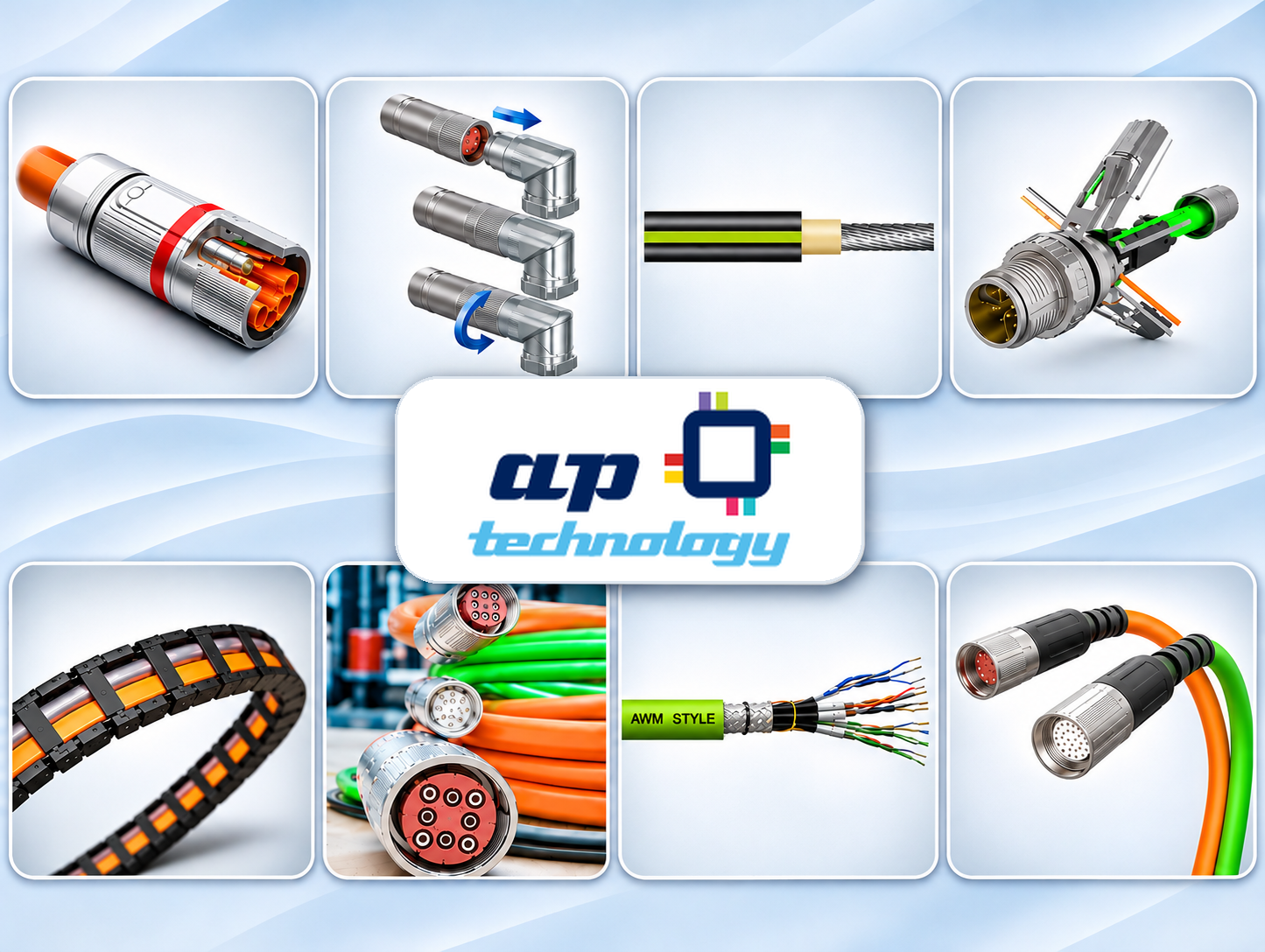
It is UL listed and VDE approved, with crimp or solder contacts and a clamping range of Ø3.5 to Ø14.7mm. Couplings can be a screw thread or the patented Speedtec quick lock system. Based in Hayes with stock held in the UK, AP Technology ships to manufacturers, subcontractors, installers and resellers worldwide. The company is ISO 9001 quality accredited and works from design, sourcing and manufacture through to delivery, so one technical sales team can look after a project from the first question to the final consignment. Need a price or some technical advice on solder and crimp signal connectors for custom looms? Call 020 8848 3074 or email connect@aptechnology.biz with your application details and any part numbers you have.
Visit the AP Technology Ltd website for more information on Solder and Crimp Signal Connectors for Custom Looms
ENQUIRY FORM
