
Photo Electric Detectors
Modern photoelectric detectors ensure the detection of any type of target object (opaque, transparent, reflective etc.) and are found in a very wide variety of industrial, commercial and domestic applications. There are a number of arrangement options: * Thru-beam: The transmitter and receiver are seperate and facing each other. This system offers the longest sensing distance, up to 30m for some models. * Reflex: The transmitter and receiver are combined within the same enclosure. In the absence of the target, the infrared beam from the transmitter is sent back to the receiver via a reflector, mounted opposite the detector. * Polarised Reflex: Where bright or reflective targets need to be detected, a standard reflex system is unsuitable since the targets can reflect light back to the detector and so cause false operation. For these applications, a polarised reflex detector is ideal. This type of detector transmits visable red light and incorporates two oppositely polarising filters: - The transmitter filter only allows vertically polarised light to pass. - The receiver filter allows only horizontally polarised light to pass. * Diffuse: The transmitter and reciever are combined within the same enclosure. The infrared beam generated by the transmitter is reflected back to the receiver by any target object of sufficient reflectivity which enters the sensing zone. The sensing distance of this type of system is much lower than that of a reflex system, and for this reason their use in a dirty environment is not recommended. * Diffuse with background suppression: These incorporate an adjustment potentiometer which allows the detector to "focus" its detection zone over a specific range of distances. This is achieved by changing the compression ratio of the two return signals coming back to its two receivers, thus allowing it to ignore any background surfaces.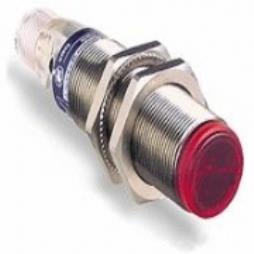
Visit the Burnand XH Ltd website for more information on Photo Electric Detectors
ENQUIRY FORM
More Products