Inside the Chamber: What Really Happens During a Thermal Shock Test?
Thermal Shock Testing is designed to push materials to their limits. It’s one of the most effective ways to test how well a product, from aerospace components to cutting-edge electronics, can handle sudden, extreme changes in temperature.
At Unitemp, we work closely with UK manufacturers to make this possible, supplying and supporting industry-leading thermal shock chambers from our global partner, ESPEC.
But what actually goes on inside one of these chambers? And why is thermal shock testing so important in modern product development and compliance?
Let’s take a look behind the doors.
What Is Thermal Shock Testing and Why Is It Important?
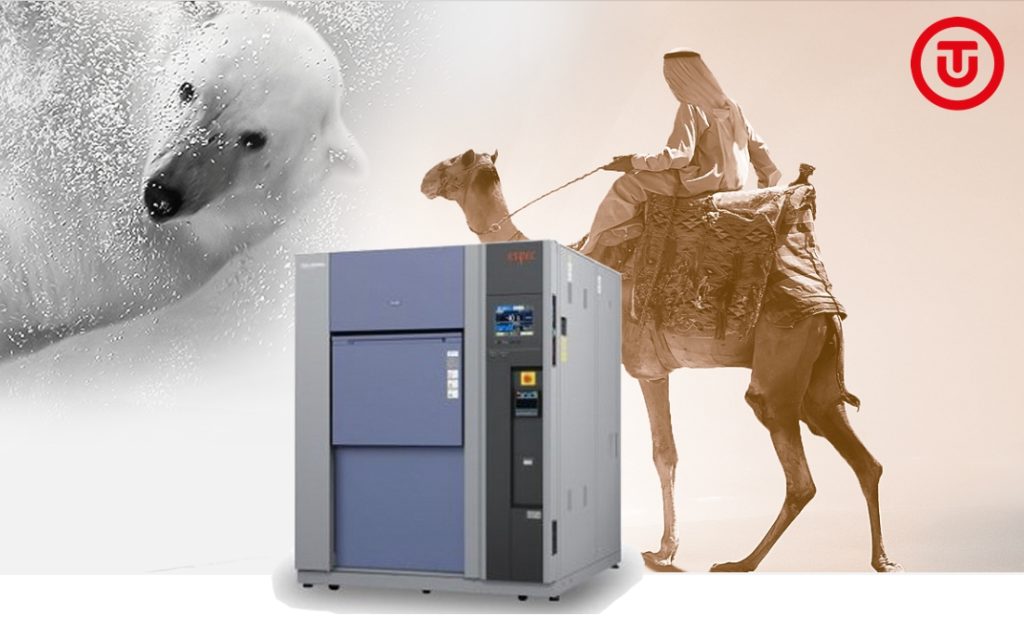
Thermal shock testing replicates sudden, extreme temperature changes that resemble the most demanding real-world conditions — imagine a product undergoing temperature shifts from -70°C to +200°C in mere seconds. Such environments can significantly harm materials, leading to issues like cracking, warping, bonding failures, or even structural damage.
In contrast to gradual thermal cycling, which slowly alters temperatures, thermal shock testing rapidly and repeatedly tests products at their limits. This rigorous evaluation is crucial for confirming reliability in:
PCBs and microelectronics
Aerospace components
Automotive sensors and assemblies
Medical and defence-grade materials
In these industries, failure is unacceptable; thus, thermal shock testing helps manufacturers uncover hidden defects before they escalate into significant problems.
Inside the Chamber: Simulating the Extremes
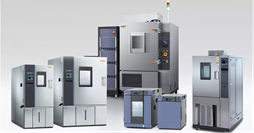
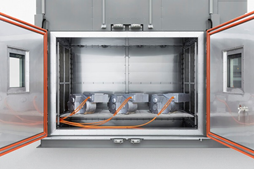
ESPEC’s thermal shock chambers, available in both two-zone and three-zone configurations, are designed for precise, rapid temperature transitions. In a two-zone system, the product is automatically transferred between a hot and cold zone. Three-zone chambers add an ambient zone, enabling even more refined testing cycles.
These systems are engineered to:
Achieve temperature transitions in under 10 seconds
Maintain accuracy within ±1°C
Handle wide temperature ranges from -70°C to +200°C
Repeat hundreds of cycles without degradation
With intuitive touchscreen interfaces and remote monitoring via ESPEC’s P-300 control systems, users have complete visibility and control throughout the process. At Unitemp, we ensure our clients in the UK are fully supported—from equipment selection and commissioning to training and ongoing maintenance.
Finding the Flaws That Matter
But what does thermal shock testing truly reveal? Inside the chamber, the test material expands and contracts at extreme rates. If a component has a weak solder joint, poor material adhesion, or a design flaw, these issues will become evident. Common failure modes include:
Micro-cracking in PCBs or composite parts
Delamination of multilayer materials
Seal failures in housings or enclosures
Optical distortion in lenses and coatings
Structural fatigue in bonded assemblies
The ESPEC Advantage — Offered by Unitemp
As the sole UK distributor of ESPEC, Unitemp grants access to a highly regarded selection of thermal shock chambers known for their reliability, consistency, and ease of use. Renowned organisations across the globe trust ESPEC systems for:
Meeting international standards including MIL-STD-883 and IEC 60068
High-speed testing with minimal downtime
Network-compatible functionality for lab integration
Compact designs suited for R&D and production environments
How Different Industries Use Thermal Shock Testing
Unitemp’s customers utilise thermal shock testing in sectors like electronics, aerospace, automotive, medical, and defence, where it plays a critical role in uncovering hidden weaknesses before products reach the market. For electronics manufacturers, it’s used to verify the reliability of solder joints and circuit boards before full-scale production. Aerospace suppliers rely on it to simulate the intense thermal stress experienced during rapid altitude changes, ensuring compliance with strict regulatory standards.
In the electric vehicle space, developers use thermal shock chambers to evaluate how battery modules hold up under sudden temperature swings. Meanwhile, medical device engineers depend on this testing to confirm the durability of equipment that must be repeatedly sterilised and transported — without compromise.
No matter the industry, the objective remains the same: to ensure every component can withstand the harshest conditions it might face in the real world. From benchtop models to large chambers, we assist UK manufacturers in finding the ideal solution for their requirements and ensure its optimal performance with our expert service and support.
Interested in introducing thermal shock testing to your quality programme? Need to upgrade from an outdated system? Take a look at our range of thermal shock test systems. Our team is here to assist.
Get in touch to arrange a consultation or demonstration.
Visit the Unitemp Ltd website for more information on Inside the Chamber: What Really Happens During a Thermal Shock Test?
ENQUIRY FORM
More News