Challenges of Managing Waitlists in Busy Restaurants
Long or uncertain wait times can damage customer experience and expectations. If communication is unclear during the wait, some guests will leave. In a busy restaurant, effective waitlist management relies on staff predicting table availability and wait times accurately—get it wrong and dissatisfaction follows.
Outdated methods
Surprisingly, even in 2025 some restaurants still use paper lists and wall calendars for reservations. These outdated tools lead to disorganised waitlists and put pressure on staff, causing miscommunication between front of house, waiting staff, kitchen teams, and customers. Delays are common when a paper or basic digital list doesn’t integrate with paging or update in real time. At peak times, poor waitlist control can create crowding in the waiting area. Walk-ins may leave, those waiting can feel ignored, and staff face the stress of managing multiple frustrated guests.
How paging systems improve waitlist management
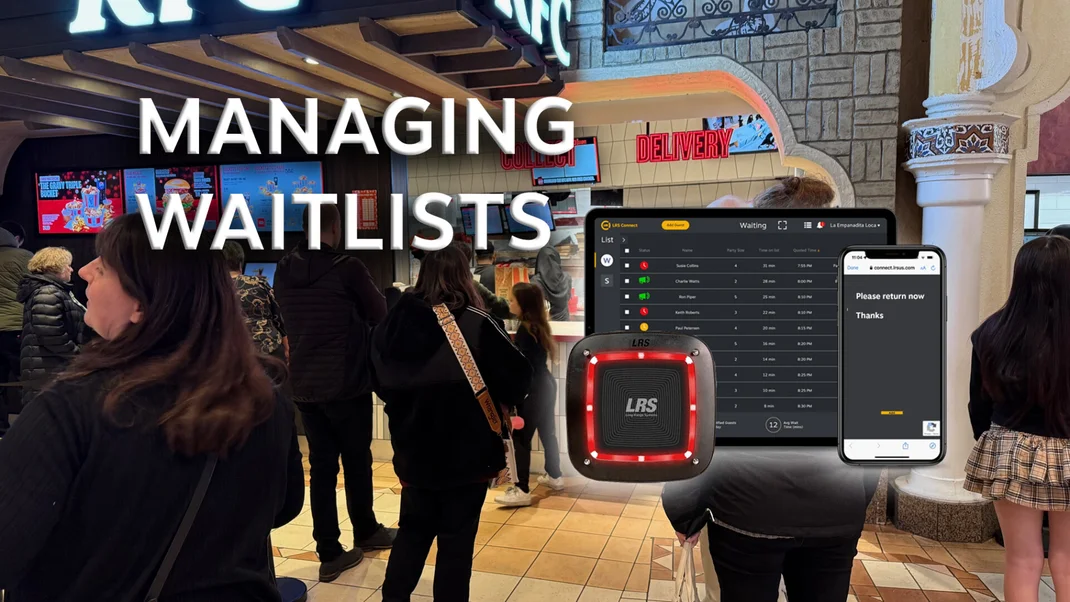
Paging brings a smarter, calmer, more guest-friendly approach. Instead of shouting names or scouting the foyer for guests who’ve wandered off, staff can check a digital waitlist and page customers directly. This reduces confusion and missed reservations. Guests are notified the moment their table is ready and can return immediately. A less hectic foyer or bar also frees space for more walk-ins and speeds table turns.
Integrated waitlist systems such as LRS Connect let teams manage those waiting more effectively. You can maintain two lists—one for reservations (with priority handling while they wait) and another for walk-ins.
Providing accurate wait times and notifications
Data matters. Paper lists and basic online tools offer little insight. With LRS Connect, you can see exactly how long each customer has waited, how quickly staff call guests back, and when recommended wait thresholds are exceeded. Managers receive real-time alerts when service is slowing and customers are waiting longer than expected. After each shift, you can download data to analyse patterns and pinpoint where delays occur.
Ensuring fairness and transparency
Guests want clarity on the callback process. Traditional name-calling can make people anxious—was that my name, or someone else’s? An integrated waitlist with paging removes the guesswork. When the pager buzzes, it’s their turn. This speeds the process and keeps guests relaxed. If anyone has waited longer than expected, the waitlist flags it in real time (for example, by highlighting their name in red) and managers are alerted. When asked for an update, staff can see exactly how many parties are ahead and whether the guest is within, or beyond, the quoted window—so they can be upfront about any delay. The result is a better experience and less frustration.
Choosing the right paging system
There are many options on the market, but currently only one waitlist platform integrates with LRS paging systems: LRS Connect. It works seamlessly with LRS pagers and is easy to adopt if you already use LRS products. LRS Connect runs in a web browser on any device and is free to use. LRS UK backs its products with helpful UK-based support for setup and a three-year warranty for peace of mind.
Conclusion: paging as a tool to optimise waitlists and satisfaction
A waitlist that integrates with paging—such as LRS Connect—helps you manage waiting customers, recall them efficiently, analyse service data, and reduce delays. Think of the time saved by not hunting for guests. When choosing a waitlist, ensure it integrates with tools that streamline management, provide useful data, enable reliable callbacks, and ultimately improve service. Look after your guests and they’ll return.
Visit the Long Range Systems UK Ltd website for more information on Challenges of Managing Waitlists in Busy Restaurants
ENQUIRY FORM